el maestro

el maestro
"Trincheras de ideas valen más que trincheras de piedra." José Martí

Tuesday, February 4, 2014

Professor and Author Piero Gleijeses Sends a Letter to Obama


LETTER TO OBAMA

February 5, 2014

Mr. President,

I will not address the juridical flaws of the case against the Cuban Five. These flaws are well known and others have written you about them. The Five were tried in a kangaroo court and received very heavy sentences because of the crimes of Fidel Castro.

What are these crimes?

Clearly, they have nothing to do with the state of political democracy in Cuba. The United States has very good relations with the government of Saudi Arabia and, as you know, there are no political freedoms there; indeed, there isn’t even freedom of religion and the rights of women are severely curtailed.

Castro’s crime – for which the Five are paying – is obvious: he humiliated the United States. As Leycester Coltman, a British ambassador to Cuba, has written, Fidel Castro is “still a bone . . . stuck in American throats. He had defied and mocked the world’s only superpower, and would not be forgiven.”[1]

Where did the Castro brothers defy the United States? One of the most important places is southern Africa. I am sure you sensed this in your recent visit to South Africa when you witnessed how warmly the South African people responded to Raúl Castro. As the chair of the African National Congress said, when introducing Raúl Castro, “We now will get an address from a tiny island, an island of people who liberated us, who fought for our liberation.”

While the Cubans were fighting for the liberation of the people of South Africa, successive American governments did everything they could to stop them.

In October 1975, the South Africans, encouraged by the Ford administration, invaded Angola to crush the left wing Popular Movement for the Liberation of Angola (MPLA). In response, 36,000 Cuban soldiers suddenly poured into Angola. By April 1976, the Cuban troops had pushed the South Africans out.

Had the South Africans succeeded in imposing their will on Angola, the grip of white domination would have tightened over the people of southern Africa. It was a defining moment: Castro sent troops to Angola because of his commitment to what he has called “the most beautiful cause,”[2] the struggle against apartheid. Castro, Kissinger explained, “was probably the most genuine revolutionary leader then in power.”[3]

The tidal wave unleashed by the Cuban victory in Angola washed over South Africa. Mandela later recalled hearing about it while he was incarcerated on Robben Island. “I was in prison when I first heard of the massive aid that the internationalist Cuban troops were giving to the people of Angola. … We in Africa are accustomed to being the victims of countries that want to grab our territory or subvert our sovereignty. In all the history of Africa this is the only time a foreign people has risen up to defend one of our countries.”[4]

This Cuban victory over apartheid meant a defeat and a humiliation for the United States. Enraged, the Ford administration ended the talks it had been conducting with Cuba toward normalizing relations.

President Carter also said there could be no normalization of relations until Cuba withdrew its troops from Angola – even though the CIA conceded that the Cuban troops were “necessary to preserve Angolan independence” against the continuing threat posed by South Africa.[5] In June 1980, the South Africans launched another major raid, advancing more than a hundred miles into Angola, stopping only thirty miles south of the Cuban line protecting the country. The UN Security Council responded with a tough resolution condemning the invasion, and the US representative on the Council minced no words in his speech chastising South Africa. When it came to vote, however, he abstained because the resolution included language suggesting that if South Africa launched another attack on Angola the Security Council might impose sanctions.

I am sure you can appreciate the irony, Mr. President. The United States had stationed large numbers of troops in Italy, West Germany and Turkey – countries that faced no immediate military threat from the Soviet Union in 1980, but Jimmy Carter denied the Angolans the right to have Cuban troops to protect their country from the very real South African threat.

Castro refused to bow to Carter’s demands, which meant that he sacrificed the possibility of normalization with the United States (and the lifting of the embargo) in order to protect Angola from the apartheid regime.

From 1981 to 1987, the South Africans launched bruising invasions of southern Angola, encouraged by the friendly Reagan administration in Washington. It was a stalemate until November 1987, when Castro decided to push the South Africans out of Angola once and for all. His decision was triggered by the fact that the South African army had cornered the best units of the Angolan army in the southern Angolan town of Cuito Cuanavale. And his decision was made possible by the Iran Contra scandal rocking Washington. Until the Iran Contra scandal exploded in late 1986, weakening and distracting the Reagan administration, the Cubans had feared that the United States might launch an attack on their homeland. They had therefore been unwilling to deplete their stocks of weapons. But Iran Contra defanged Reagan and freed Castro to send Cuba’s best planes, pilots, and antiaircraft weapons to Angola. Castro’s strategy was to break the South African offensive against Cuito Cuanavale in the southeast and then attack in the southwest, “like a boxer who with his left hand blocks the blow and with his right – strikes.”[6]

On March 23, 1988, the South Africans launched their last major attack against Cuito Cuanavale. It was an abject failure. The US Joint Chiefs of Staff noted, “The war in Angola has taken a dramatic and — as far as the South Africans are concerned — an undesirable turn.”[7]

The Cubans’ left hand had blocked the South African blow while their right hand was preparing to strike: powerful Cuban columns were moving towards the Namibian border, pushing the South Africans back. Cuban MIG-23s began to fly over northern Namibia.

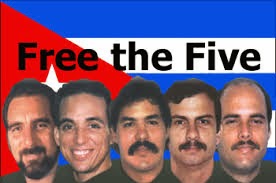
Among the Cuban soldiers advancing toward the Namibian border were two young men whose names are now well known: Fernando González Llort and Gerardo Hernández Nordelo. Ten years earlier, René González Sehwerert had also fought in Angola. These three men, together with Ramón Labañino Salazar and Antonio Guerrero Rodríguez, are the five Cubans on whose behalf I am writing.

US and South African documents prove that the Cubans gained the upper hand in Angola. The Cubans demanded that Pretoria withdraw unconditionally from Angola and allow UN-supervised elections in Namibia. The US Joint Chiefs of Staff warned that if South Africa refused, the Cubans were in a position “to launch a well-supported offensive into Namibia.” The South Africans acknowledged their dilemma: if they refused the Cuban demands, they ran “the very real risk of becoming involved in a full-scale conventional war with the Cubans, the results of which are potentially disastrous.” The South African military was grim: “We must do the utmost to avoid a confrontation.”[8]

Pretoria capitulated. It accepted the Cubans’ demands: it withdrew unconditionally from Angola and agreed to UN-supervised elections in Namibia.

The Cuban victory reverberated beyond Namibia and Angola. In the words of Nelson Mandela, the Cuban victory “destroyed the myth of the invincibility of the white oppressor … [and] inspired the fighting masses of South Africa … Cuito Cuanavale was the turning point for the liberation of our continent – and of my people – from the scourge of apartheid.”[9]

You were at Mandela’s memorial service, Mr. President, and you celebrated his legacy. You saw the reaction of the South African people to Raúl Castro and to the name of Cuba. Yes, Cuba changed the course of history in southern Africa despite Washington’s best efforts to prevent it. In so doing Cuba offended and provoked the United States – not only Ford, and Reagan but also Carter, self-styled champion of human rights. In the American mind, Cuba was the aggressor and the United States was, as always, on the side of the angels. As US historian Nancy Mitchell has pointed out, “our selective recall not only serves a purpose, it also has repercussions. It creates a chasm between us and the Cubans: we share a past, but we have no shared memories.”[10]

Perhaps, Mr. President, what you saw in South Africa may inspire you to bridge the chasm and understand that in the quarrel between Cuba and the United States the United States is not the victim, and that the Five Cubans are, simply, political prisoners.


Piero Gleijeses


Piero Gleijeses is a professor of US foreign policy at the Johns Hopkins School of Advanced International Studies. His most recent book is Visions of Freedom: Havana, Washington, Pretoria and the Struggle for Southern Africa, 1976-1991, Chapel Hill, 2013. His other books include The Cuban Drumbeat: Castro’s Worldview, Seagull Books, 2009; Conflicting Missions: Havana, Washington and Africa, 1959-1976. Chapel Hill, 2002; Shattered Hope: The Guatemalan Revolution and the United States, 1944-1954, Princeton, 1992; The Dominican Crisis: The 1965 Constitutionalist Revolt and American Intervention. Baltimore, 1978 (revised edition: La esperanza desgarrada: la rebelión dominicana de 1965 y la invasión norteamericana, Dominican Republic, 2012).

Friday, January 24, 2014

Celebrating José Martí's 161st Birthday


Cuban Dinner and Dance


Celebrate the 161st birthday of José Martí,
 - Cuban freedom fighter, poet, essayist, journalist


Saturday January 25th 2014


Doors open 6:30 pm  
Dinner 7 pm  
Live Band 8:30


With Pablo Terry and Sol de Cuba


Ukrainian Cultural Centre 1604 Bloor Street West 
(just west of Dundas W. subway)

Accessible 

Tickets $35 paid in advance  $45 at door

For information and tickets:
Arids 416 534 5340, Sharon 905 951-8499, Liz 416 654-7105
Sponsored by Canadian-Cuban Friendship Association Toronto

Friday, December 6, 2013

Nelson Mandela, 1918-2013: Friend of Cuba


The Canadian Network On Cuba sends the deepest condolences on the death of Nelson Mandela to his family and to the people of South Africa. Mandela made many sacrifices in the fight against apartheid, but when he became South Africa's president he never sacrificed his friendship with those countries that had stood with the South African people during their long and arduous struggle for freedom, especially Cuba. Cuba was the first country outside of Africa that Mandela visited after he was released from 27-years of imprisonment. 

Nelson Mandela's friendship with and admiration for Fidel Castro was forged in Cuba's crucial contribution to the dismantling of the racist South African regime, particularly the 1987-88 battle of  Cuito Cuanavale in Angola. This decisive defeat of the racist South African armed forces played a critical role in bringing apartheid to an end. As South Africa and the world marks the passing of this profound symbol of the struggle for equality and justice, Cuba also says farewell one of its best friends.

Wednesday, December 4, 2013

Cuba reiterates its willingness to negotiate with the US to find a solution in the case of Mr. Gross


Statement from director of
U.S. relations for Cuban Ministry
of Foreign Affairs


On December 3, press media in the United States reported information about a letter from 66 Democratic, Republican and independent U.S. Senators to President Barack Obama, in relation to U.S. citizen Alan Gross, who is serving a prison term in Cuba.

The Senators urged the President to afford humanitarian priority to the freeing of Mr. Gross and take whatever steps necessary in the “national interest” of the U.S. to expedite his release, expressing their willingness to support him in the accomplishment of this objective.

In reference to this development, the general director for U.S. relations within the Cuban Ministry of Foreign Affairs, Josefina Vidal Ferreiro, released the following statement:

“The Cuban government reiterates its willingness to immediately establish a dialogue with the United States government, to find a solution in the case of Mr. Gross based upon reciprocity, reflecting the humanitarian concerns of Cuba linked to the case of the four Cuban anti-terrorists imprisoned in the United States.

Gerardo Hernández, Ramón Labañino, Antonio Guerrero and Fernando González, who are part of the Five, are serving prolonged, unjust prison terms for crimes they did not commit, which were never proven. This incarceration is taking a severe human toll on them and their families. They have not seen their children grow; they have lost mothers, fathers and siblings; faced health problems and been separated from their families and their homeland for more than 15 years.”

Josefina Vidal also referred to a communiqué released by the U.S. State Department on December 2, which insisted on the immediate and unconditional release of Mr. Gross, arguing that his incarceration is unjustified. She recalled:

“Mr. Alan Gross was detained, prosecuted and sanctioned for violating Cuban law while he implemented a program financed by the U.S. government which had as its objective destabilizing Cuba’s constitutional order through the establishment of illegal, undercover communications systems, with non-commercial technology. These actions constitute serious crimes which are severely punished in most countries, including the United States.

Mr. Gross has received dignified and humane treatment since his arrest.

Cuba understands the humanitarian concerns related to the case of Mr. Gross, but believes that the U.S. government bears responsibility for his situation and that of his family, and must therefore work with the Cuban government in the search for a solution."


Havana, December 3, 2013

Source: Granma

Friday, November 15, 2013

Obama: The Most Effective of Two Evils, Part II

Arnold August, on democracy in Cuba


TWO-PART ARNOLD AUGUST INTERVIEW AND EXCHANGE WITH GLOBAL RESEARCH JOURNALIST JULIE LÉVESQUE ON PARTICIPATORY DEMOCRACY, CUBAN DEMOCRACY, EGYPT / TAHRIR, QUEBEC SPRING, MADISON WISCONSIN, OBAMA, US DEMOCRACY AND HONDURAS COUP D’ÉTAT - April 29, 2013
Part I
Part II
Obama: The Most Effective of Two Evils

Julie Lévesque: In regards to U.S. democracy, in your book Cuba and Its Neighbours: Democracy in Motion you talk about the notion of the lesser of two evils and the illusion of change. Could you give us an overview of your analysis of Barack Obama?

Arnold August: In this book I chronicle in a very detailed manner what I call “the Obama case study” because one of my main fears and preoccupations is not so much from the so called “right”, but rather the illusions that exist among liberals and among some people on the left with regards to Obama. So I dissected everything that Obama wrote in his first two books, his book of 2004 as he was running for senate and his book of 2008, just before he was nominated. Now looking into that, it very clearly indicates that Obama, with the support of others who were responsible for building the image of change, gave the right signals to the oligarchy that he is not in favour of changing the status quo. At the same time, he provided some indications that people might look to him as a source of change.

Now, if one looks at his books very carefully, on key issues, for example on Vietnam, he stood firmly in favour of U.S. aggression of Vietnam. He ridiculed people on the left, liberals who took a stand against the Vietnam war.

JL: Like Doctor Martin Luther King.

AA: Exactly. He took a stand against Vietnam. He didn’t ridicule Martin Luther King but he ridiculed people on the left who took a stand. On the issue of Chile for example, he complained in his book about people on the left, or liberals, being so concerned about the need to support the struggle of the people in Chile against Pinochet, when at the time, Obama asserted, they ignored that there was a dictatorship in the Soviet Union and other countries in the Eastern Bloc. And so he indicated clearly to the ruling circles that, as far as the basic fundamentals of U.S. foreign policy and domestic policy were concerned, that he is their man. At the same time, he gave the impression that he was in favour of change. Now he had a very specific assistant in this whole attempt to present him as the person of change, David Axelrod, who has very close ties to the ruling circles. He specializes in getting Afro-Americans elected in positions of power. He did that with the mayor of Washington D.C. and then his next customer was Obama.

JL: You explain in your book that Barack Obama was used to reduce the credibility gap among the African Americans. Could you tell us how that was done?

AA: That is really important. For example, Brzezinski who was Bill Clinton’s advisor, very cleverly pointed out – he was right – that there was a major credibility gap for the American ruling circles with regards to Latin America, with countries such as Venezuela and the new movement there; and with regards to the Middle East, before the eruption took place in Egypt; and with other parts of the world. And they had to put a new face on the American foreign policy in order to recuperate that credibility and that’s why he said “I am proposing Obama; he could do it.”

The same thing goes for domestic policy. I think that one of the main things was that the United States has always been, and rightly so, very fearful of an African American revolt against the ruling circles. Now, when Obama made his famous speech, I believe it was for senator, he said that there is no Afro-America, no Latino-America, that there is just one United States of America. In other words, let’s forget about racism especially if I get elected to the White House. And so the the most effective of two evils, is an important point.

JL: Because when one criticises Obama, a lot of people say “well, he’s better than Bush”.  But that is not an argument and it’s a way to avoid any criticism.

AA: That’s right. Well, this is exactly what the problem is. Especially among people who call themselves liberals or, unfortunately, many people on the left say “well, he’s better than Bush, he is the lesser of two evils.” Now, I am from Montreal, and I am not an American, so in order to deal with criticism of Obama and that usual way of looking at things, I have investigated carefully other writers from the United States, for instance Black Agenda Report in the United States, based in California. They represent what is the best among African Americans, that revolutionary progressive tradition that goes back from the time of the struggle against slavery, to the 1960’s and 1970’s.

JL: And they are very critical of Barack Obama.

AA: Yes, because there is a major pressure from the ruling circles to declare: “We people, on the left, or liberals or progressive, we cannot criticise Obama because he is being criticized by the right.” So, I ally myself if you like, with Black Agenda Report and other American scholars, intellectuals concerned with civil liberties, African American lawyers such as Michelle Alexander who wrote an excellent book on the situation of African Americans today. And I agree with Black Agenda Report that Obama, far from being the lesser of two evils, is the most effective of the two evils. One of the main themes in that chapter of my book is that Obama does not really represent a continuation of Bush policies. Quite the contrary; he represents an offensive, a new offensive on behalf of the U.S. ruling circles, domestically as well as internationally.

JL: All that while giving an illusion of positive change?

AA: Yes and it still works, because the second time around, a lot of people were still claiming “well, he is better than Romney.” But he represents an offensive, if you just take for example, the upsurge among the Wall Street Movement not long after Egypt, Madison, Wisconsin and Spain, three countries in a row, which followed up on the Egyptian revolution. Now there were a lot of positive things about the Occupy Wall Street movement, and it’s not a homogeneous movement, it was not then, it is not now; some are openly against the two-party system, some are not, some make themselves unwittingly easy prey for the Obama administration. But the movement is mainly based on white middle class or lower middle class people of the United States. So you could imagine if the African American population at that time had been liberated from this illusion that Obama being in the White House means salvation to African Americans and instead join the Occupy Wall Street movement, it would have been a major problem for the U.S. ruling circles. So this is what Brzezinski had in mind, credibility gap internationally as well as domestically.

The health care reform is another example. It was just another way of increasing the profit of the insurance companies – there was nothing more than that, another offensive on the part of the ruling circles. And while providing the image that he is in favor of change, he is the one who plays the African American card every single day. Every time something happens, let’s say they are honoring Martin Luther King or Rosa Parks, he says “if it was not for Martin Luther King” or “Rosa Parks, I would not be here.” He never misses an occasion to raise the fact that he is an African American. At the same time, when African Americans are being killed on the streets, he has nothing to say. So in fact, and I quote some people, American scholars and people involved in legal rights and civil rights, he in fact assists in the killing of African Americans by, on the one hand, giving the impression that they are safe, because there is an African American in the White House, and at the same time not saying anything when they are killed.

If you take the example of the famous issue of the so called gun control, I wrote in my book published before the Newtown shooting that the killings are going to carry on because no one in the ruling circles raises the issue that the second amendment is a major problem. Now they have this false debate going, for or against gun control, but the competition between the Obama forces on the one hand and the so called “right forces” on the other side, merely revolves around which of these two forces are more faithful to the second amendment. None of them even think or hint at the necessity to challenge the second amendment because, in my view, the real question which should be asked in relation to gun control is “how come, in the United States, we are allowed to have an arms manufactory industry with no control, that companies can just manufacture arms of all kinds, the most devastating arms and sell them on the market?” But neither the Obama nor the other forces challenge this.

Obama keeps on saying “our Constitution is the oldest democratic Constitution in the world.” It’s true that it’s a very old constitution, but that’s a negative thing. Is it not time for the constitution to be updated? That people should have a say about what the constitution should be in the United States of America? The basic clauses such as the right to be armed should be rethought in order to eliminate this whole plague on American society?

JL: You also talk about the fact that the military industrial complex as well is never challenged by any of the two parties.

AA: Now, for example there is – if you watch CNN or any other U.S. broadcast – they keep on repeating continuously that in the United States you have democrats/republicans – left/right – liberals/conservatives. They keep giving the impression there’s two opposing forces in the United States of America. But it isn’t the case. It is basically the same force which changes its appearance from time to time. When one force gets discredited, they put the other in its place.

JL: You mean the same economic interests are behind the two parties?

AA: That’s right. Now there has been a lot of debate over the last while regarding budget, amounts of money necessary, but there are several American academics, which I mention in my book, who say that you can say anything about the U.S. budget or U.S. spending, but you cannot touch upon the issue of military spending. I think that one of the weaknesses of the Occupy Wall Street movement is that they talk about the banks in general without putting in perspective or without highlighting the proportion of military spending due to the fact that the United States is an imperial power. As a result of this imperialism, therefore, the U.S is necessarily spending money on armaments, and there is the fusion of the military, the industries and the banks resulting in military spending. The whole economy in the United States is built on military spending but no one challenges that, including Obama. They can make some adjustments, a few dollars less here, a few dollars more here, but addressing the reasons why a very important portion of American spending goes on the military is not allowed to enter into the discussion.

JL: And if both parties agree on that issue, does that not mean that when it comes to foreign policy, they agree that America needs to maintain and increase its military power everywhere on the globe?

AA: That’s exactly it. In fact Obama, right from the beginning, said that the United States taking it from the puritans at the end of the 17th century is a light for the world; it is the most powerful country in the world, it is the best nation in the world, even after the American soldiers would commit atrocities against people in Iraq or Afghanistan or anywhere, he would say “We have the best army in the world – the best nation in the world.” And sometimes he’s been accused of being against “American exceptionalism”, the idea that America is an exceptional country. But that is not true that he is against this concept.  He even said he agrees with American exceptionalism, that this was born at the end of the 17th century with the puritans. He said “We are an exceptional nation and we have a special role to play in the world to bring democracy, civilization and culture to the people in the world.”

So there is no difference between him and people such as Palin, Romney or McCain. The only difference is that the Obama approach as manufactured by Axelrod and others is much more effective in pulling the wool over the eyes of many people; and my basic conclusion is that democracy in the U.S. now works very well, it is not in crisis. They are able to recuperate themselves after Bush, to put an entirely new face on a policy that is increasing the attacks on a world scale on behalf of Obama. Just look at what he’s done over the last five years from Iraq, Afghanistan, and other attacks in several countries; Soon after he was elected for his first mandate, a coup d’état took place in Honduras. Bush, McCain, Palin would not have been able to get away with it, but Obama got away with doing this coup d’état because there was still – even still now amongst some Latin American, progressive circles – a certain degree of illusion regarding Obama, that he was different from the Republicans or the right. But he really worked in favour of this Honduras coup d’état using the better Ivy League language, and body talk, to give the impression that he’s not really behind it. But what did he say during the Honduras coup? Once Zelaya, the president was kidnapped, taken out of Honduras and then people were on the streets for over 100 days, risking their lives to demonstrate against the coup d’état and the American-backed military there, Obama kept on saying (and also Clinton and the others) that both sides have to use restraint. That’s very interesting. You have the military in power there, Zelaya outside of the country, people with their bare hands trying to resist, and he puts both sides on the same level – both sides have to use restraint.

JL: He tried to look neutral?

AA: Right. But in fact Obama never agreed that Zelaya should return to Honduras as a president. He said “I am against the coup, it’s no good, I am against the military, it’s no good,” but he would always oppose the return of Zelaya , who was elected, to Honduras. So that’s how they operate, that’s how the United States got away with it.

Source: Democracy in Cuba

Wednesday, November 13, 2013

“Cuban Democracy” versus “US Democracy”

Arnold August

TWO-PART ARNOLD AUGUST INTERVIEW AND EXCHANGE WITH GLOBAL RESEARCH JOURNALIST JULIE LÉVESQUE ON PARTICIPATORY DEMOCRACY, CUBAN DEMOCRACY, EGYPT / TAHRIR, QUEBEC SPRING, MADISON WISCONSIN, OBAMA, US DEMOCRACY AND HONDURAS COUP D’ÉTAT - April 29, 2013

Part I
Part II
“Cuban Democracy” versus “American Democracy”
Arnold August is a political scientist, author and lecturer living in Montreal. He is the author of Democracy in Cuba and the 1997–98 Elections (Editorial José Martí). He has also contributed a chapter entitled “Socialism and Elections” for the volume Cuban Socialism in a New Century: Adversity, Survival and Renewal (University Press of Florida). His latest book is Cuba and Its Neighbours: Democracy in Motion.

Julie Lévesque: Tell us about your book Cuba and Its Neighbours: Democracy in Motion, why did you write this book and how did you go about it?

Arnold August: Well I think many people will agree that when it comes to international politics, pressure by the countries in the North, especially U.S. and regarding the South in general — Asia, Africa and Latin America – there are very few themes that are raised other than the theme of democracy. It has been this way especially since the late 1980s and early 1990s  since the fall of the former Soviet Bloc, the issue of democracy or rather the pretext of democracy is increasingly being used by the U.S. and Europe as a reason to interfere in the internal affairs of other countries. At the same time, strange as it may seem there are very few books written on that issue of democracy as such. I guess not many people want to address this subject because it is a very loaded term, it’s not easy to deal with, but I always thought it was necessary. It is in fact my second book on the issue of democracy, the first one, written in 1999 dealt specifically with democracy and elections in Cuba.

JL: I guess a lot of people would be surprised to hear that there is democracy in Cuba. What kind of democracy is it?

AA: In Canada and the U.S. especially, the whole issue of democracy is supposed to be completely foreign to the Cuban experience and now of course the same attitude applies to other countries such as Venezuela. I deal with the issue of democracy but as you notice the subtitle of the book is Democracy in Motion. So I don’t deal only with democracy as such. I try to develop the concept of “Democracy in Motion” that is democratization as a process which never ends and, at the center of this whole concept, I try to develop the role of participatory democracy, that is, democracy in which the people play a key role on a daily basis to make their own political power effective.

JL: Do you think people in Cuba participate more in the decision making than in Canada or the U.S. for example?

AA: Well I think you’d have to compare Cuba to what the situation was before 1959, before the Revolution. We can’t even compare it, it is so obvious there was a U.S.-controlled, a U.S.-led dictatorship in Cuba before 1959 – the Batista dictatorship – and the people were completely excluded from power. In fact, Fidel Castro was running for the opposition in the senate at the time, in the early 1950’s, and it was obvious he and his party were going to win those elections.
Cuban Revolution 1959
The U.S.-backed Batista regime cancelled the elections and organized a coup d’état. So it gives you an idea of the kind of participation there was before 1959. Since 1959 of course it has been developed. In 1959 it was the first time in the history of Cuba that the people obtained political power. I’m not saying it was perfect. It wasn’t perfect then, it isn’t perfect now. But the main feature of the 1959 Revolution is that for the first time, political power was in the hands of the people. Then term “sovereignty invested in the people” became a real meaningful concept in Cuba.

Now we can draw a parallel between the Cuban revolution and the rebellion in Egypt recently. I would call it a revolution because the Egyptian people revolted and actually succeeded in overthrowing the U.S.-backed dictator Mubarak.

What I find interesting there, and it opened my eyes further on the issue of the need for people to look at democracy as an ongoing process, a participatory democracy, is that the people at Tahrir Square occupied the public space and it is from that area that millions of people on a daily basis made their decisions: what to do, what their priorities were, which was to overthrow Mubarak.

They would not accept anything less than that. In the meantime, a political power was developing at the base to replace the power of the U.S.-backed Mubarak regime. And in fact they overthrew the Mubarak regime. Now what did the Obama administration do right after that? After having supported the Mubarak regime, hypocritically of course, right to the last second? When he was finally overthrown the U.S. immediately tried to impose what I call in my publication the “U.S.-centric notion of politics”, that is, multi-party democracy.

I remember very clearly, and it is chronicled in my publication, that after the overthrow of Mubarak, while the street demonstrations were still going on in Tahrir Square and in squares across Egypt, Hillary Clinton said on behalf of Obama that people have to move from protest to politics. So from the U.S. point of view, people in the street organizing themselves on an entirely new basis to somehow take political power, on an entirely different orientation, even though it was only in an embryonic way, is not politics. The only politics that count are electoral politics. Then the US organized elections in Egypt.

JL: Because this way they can control the outcome?

AA: Exactly, that is what they control through elections. The US could not control Tahrir Square, the people at a very low embryonic level aiming to take political power at the top.

JL: And was there a fear there that something like that would happen in the U.S. as well?

AA: Of course, because the first domino effect of Tahrir Square was in the United States itself.
The Obama administration had to organize elections and the first thing they did was to eliminate the political party based on the Nasserite tradition which is generally progressive and in favour of socialism, definitely in favour of sovereignty from the U.S. That was eliminated by hook and by crook as they usually do and they were left with only two parties – the Muslim Brotherhood and the Egyptian National Movement Party. Both are pro-American. Now here’s an important point as far as the electoral process is concerned versus the political process of democracy in motion: only 52% of the people actually voted in the presidential elections between the two opposing candidates. 52%! And there was a call to boycott it. Of course this is not very well known in public circles. They sort of avoid that issue.

Now here are the two things in contradiction. On the one hand you have the people in Tahrir Square and other squares looking for new ways to attain political power outside of the multi-party political system controlled by the United States. That’s why only 52% voted. At the same time in order to overthrow Mubarak in that 18 day revolution 850 people were killed and 5500 people were seriously injured. Now I ask you: Is it not easier to deposit a ballot compared to fighting on the streets with the possibility of losing your life or being seriously injured to overthrow?  So it’s not because of apathy or lack of interest. It’s basically a rejection of the multi-party system that was reflected in those elections and this is why it’s still going on.

I spent almost 24 hours a day during that 18 day period watching this thing and it allowed me to expand further on the issue of participatory democracy and how elections are used in order to legitimize the status quo. Now that is exactly what Obama did when the Muslim Brotherhood won the election. He phoned Morsi and according to the White House transcript he said “Now you are legitimate.” You have legitimacy to rule in Egypt. That’s how in these countries elections are used when controlled by the U.S. – to legitimize the dictatorship of the old guard.
Protests in Montreal, Canada 2012
We can even come closer to home. What happened in Quebec (Canada) last spring? There were millions of people in the streets, literally, students and older people, all over Quebec and what did the Liberal government say? “Well, we were elected.” Of course only 52% of the people voted and the vote split between the two/three parties. “We were elected.” They mean: “We are the legitimate representatives of the people and we can do what we want. We have the mandate to do everything. Anything.” And so the elections are used whether in Egypt, Quebec or other countries to legitimize the rule of the old guard. Now I’m not against elections. I’m not against elections with different political parties, but we have to look concretely how it takes place.

JL: So basically you’re saying that elections don’t guarantee democracy.

AA: It does not guarantee democracy and in many cases it is used as a pretext to completely wipe out any struggle by the people at the base to take political power in their own hands and develop their own type of system.

JL: How would you describe the events surrounding the Occupy Movement in the U.S.?

AA: What is interesting to note is that after the events at Tahrir Square, the U.S. were very happy to be able to replace the popular movement with the so-called elections, temporarily, because troubles were still going on and have not been resolved. Now ironically, or paradoxically and with justice, the boomerang effect or the first domino effect took place in Madison, in the U.S. itself, in a very short period after Mubarak was overthrown and people had signs saying: “The governor of Wisconsin is our Mubarak. We have to fight against the dictatorship”. They were inspired by the occupation of the public spaces in Egypt, in Tahrir Square, and they did the same thing in the Capitol of Wisconsin. The Capitol building was occupied for several weeks, people slept there, they made their own decisions, they had manifestos they were building a new political power to challenge that of the establishment political parties. Unfortunately this movement was almost immediately converted into being part of the two-party machinations in the United States so the unions got caught up into a recall struggle against the governor. That is very good; no one can be against that. But the problem is the two-party system and the idea that one party is no good and we have to get rid of it in order to get another party in.

Source: Democracy Cuba

Wednesday, October 30, 2013

Cuba by Canadian Authors


*CUBA* by Canadian Authors


These public events will be held: 

   Friday, November 8th at 6:30 pm, Ross 556 South, DLLL Lounge  York University 
and
           Sunday, November 10th at 2:30 pm at the Steelworkers Hall, 25 Cecil Street

Together in Toronto following their speaking tours in Europe and the United States:


Toronto author, Keith Bolender, a world expert on the blockade of Cuba will be presenting his latest book CUBA UNDER SIEGE: American Policy, the Revolution and Its People. In it, Bolender explores how Cuban society has been affected by the longest and most intense blockade and a ‘non- stop hostility from the world’s most powerful nation’. He offers an extensive historical analysis, first hand interviews and expert comments. Most significantly, Bolender puts the blockade of Cuba into the historical-military context of the tactic of siege and analyses the psychological impacts of it on a besieged population.


Halifax author Stephen Kimber will be presenting his newly released book What Lies Across the Water: The Real Story of the Cuban Five. The book is the result of an exhausting research effort, including the author’s review of more than 20,000 pages of court records of the longest case in U.S. history that he presents in a clear and objective narrative. Hoping to reach new audiences: ”What Lies Across the Water” represents a new and important tool in explaining the Cuban 5 especially to those who know nothing about the case and activists familiar with the case will receive new additional information.


 Montreal author Arnold August explores Cuba’s unique form of democracy in Cuba and Its Neighbours: Democracy in Motion. In this groundbreaking book he presents a detailed and balanced analysis of Cuba’s electoral process and the state’s functioning between elections. By comparing them with practices in the U.S., Venezuela, Bolivia and Ecuador, August shows that people’s participation in politics and society is not limited to a singular, U.S. - centric understanding of democracy.


Through this in depth analysis he illustrates how the process of democratization in Cuba is continuously in motion and argues that a greater understanding of different political systems teaches us to not be satisfied with either blanket condemnation or idealistic political illusions.


The authors will be happy to sign copies of their book which will be on sale at each venue.

Free Admission - Organized by: Friends of the Cuban Five-Toronto Committee

produced with volunteer labour

Wednesday, October 16, 2013

Día de la Cultura Cubana en Toronto


La Asociación de Cubanos Residentes en Toronto "Juan Gualberto Gómez", en conjunción con el Toronto Forum on Cuba y la Canada Cuba Freindship Association, así como otros grupos solidarios con Cuba de la ciudad de Toronto celebraremos el Día de la Cultura Cubana en el Centro Cultural Casa Maíz.

Domingo, octubre 20 del 2013

ENTRADA GRATIS

Casa Maíz, 1280 Finch Ave. West, Segundo Piso, 
Finch y Keele

2:00PM

Orador Central 
Profesor Keith Ellis

Invitado de Honor  
Javier Dómokos, Cónsul General de Cuba en Toronto

Skigh Jonhson, joven artista canadiense

Invitado Especial

Inti Santana, trovador